Saturday, November 23, 2013

Shi Lu (石鲁)

Shi Lu (石鲁)'s paintings are commonly exhibited auction previews in Hong Kong, but not so many as  Zhang Daqian (張大千), Qi Baishi (齐白石). You can see his paintings in several websites in the auction records (Ref at the end) .  I have tried to find some books on this Chinese painter but so far not very successful. His paintings are very unique, which is required to get an honorable name <great master(大师)> in Chinese painting world, and versatile in techniques. Uniqueness and versatility are sometimes contradict but integrate and enhance creativity in his case. I will translate some Chinese critics and comments on his paintings found in the internet into English to share the pleasure of appreciating and understanding his paintings. My personal comments will be inserted and added.


1) http://www.lingnanart.com/2013_ChineseMaster/ShiLu/Master_ShiLu_ch.htm
 
石魯 (1919-1982)

   其早期創作以版畫為主,五十年代開始轉向中國畫,於1959年創作的(轉戰陜北)是其創作歷程中具有轉折意義的作品。後與趙望雲一起創立長安畫派。文化大革命中遭受迫害,卻仍堅持不懈地探索中國畫革新的道路。

English translation
In his early art activities are mainly printmaking. In 1950's he started Chinese style painting and 轉戰陜北 (see below) made in 1959 was the turning point in his career. Then with Zhao Wangyun (趙望雲) he set up Zhang-An school. During Cultural Revolution he was criticized and persecuted but continued to pursue renovation of Chinese paintings.


   早期畫風偏於寫實,用筆堅實謹嚴,多畫革命題材。後期畫風趨逾奇崛勁健,常以華山和荷花為揮灑對象,筆力縱恣雄豪,寄寓心性的文人畫意味甚濃。在文革期間所做的多不加鈐印,而以朱砂畫印。其書法用筆如刀,隨意頓挫轉折,別具一格,對其話風亦甚有影響。

English translation
Early works were realistic. The use of brush is strict and rigid. Often used "Revolution" as a object. Later works became rather unusual in form but strong and often Mt Hua (華山) and lotus as an object. The brush stroke is xxx but show a trait of the spirit literati paintings (文人畫) at the same time.
During Cultural Revolution he mostly did not use a chop on his works but wrote his name with scarlet sand ink(朱砂). His calligraphy looks like Cuneiform Script and having his uniqueness. His narratives influenced in Chinese artists.

轉戰陜北


【名称】《转战陕北》
【作者】石鲁
【类别】中国名画
【年代】1959年
【时代】现代
【材质】】纸本
【文物现状】中国革命博物馆 = 中国国家博物馆(National Museum of China)
【规格】纵208厘米,横208厘米;

Brief biography

Shi Lu (石鲁)

Shi Lu (1919-1982) was born as Feng Yaheng in Renshou, Sichuan Province. He entered the Chinese Painting Department of the Dongfang Art School in Chengdu in 1934. In 1940 he went to Yan'an where he created woodcuts, New Year pictures and cartoons on revolutionary themes. He became a member of the Art Work Committee of the Shaan-Gan-Ning Border Area Art Association in 1944 and in 1948, he took up teaching at the Literature and Art Department of Yan'an University. In 1953, he became the head of Northwest Illustrated (Xibei huabao, 西北画报). He visited India and Egypt in 1956-1957, a trip that was to greatly inspire his further work. Acclaimed for his 1959 painting "Fighting in Northern Shaanxi", originally created for the Museum of the Chinese Revolution, he came under criticism for the same painting in 1964. This conflict with the art establishment would exacerbate during the Cultural Revolution.

Sources:

Shelley Drake Hawkes, "Summoning Confucius: Inside Shi Lu's Imagination", in Richard King (ed.), Art in Turmoil -- The Chinese Cultural Revolution, 1966-1976 (Vancouver: UBC Press, 2010), 58-90
Michael Sullivan, Modern Chinese Artists - A Biographical Dictionary (Berkeley, etc: University of California Press, 2006)
Zhongguo meishuguan (ed.), 中国美术年鉴 1949-1989 (Guilin: Guangxi meishu chubanshe, 1993) 

Shi Lu - My Selection - arranged at random ( I saw some of them in the auctions in Hong Kong in 2000-2014)


----

Ref. 
Shi Lu's chronology
http://www.gdmoa.org/zhanlan/zhanlandangan/2007/47/10244.jsp
Shi Lu's chronology and his works
http://blog.sina.com.cn/s/blog_6e9cf22d0106lhkf.html
Shi Lu's works
http://arts.tepapa.govt.nz/on-the-wall/fighting-in-northern-shaanxi/7548 (English)
http://www.ccpgssd.com/gallery/item_list.do?sid=1021&xlid=0&topage=1 
http://shilu.artron.net/works - shows many his works from the early stages


AAG

Saturday, July 6, 2013

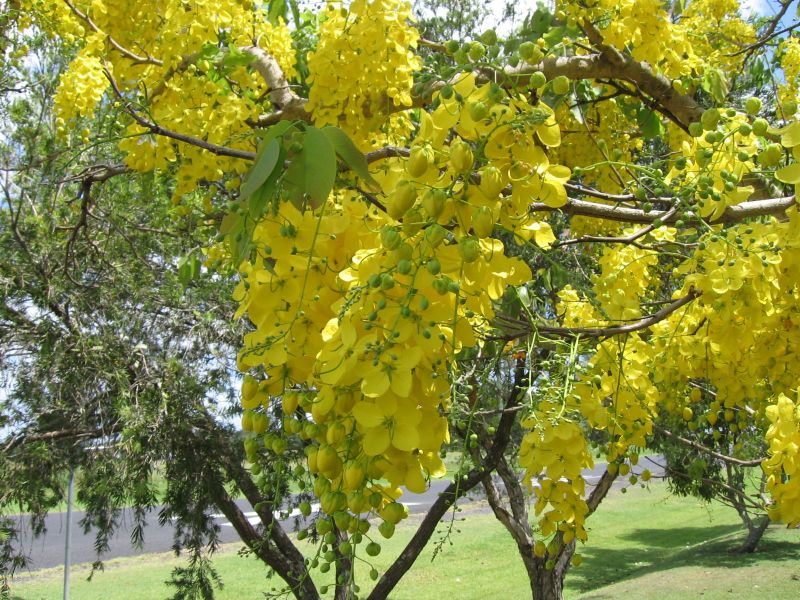
Cassia fistula, known as also the golden shower tree and 腊肠树 (sausage tree) in Chinese

Golden shower tree (Lat.Cassia fistula, Chinese  腊肠树 - meaning sausage tree) is my favorite tree as the flowers when they are in full bloom in late May and in June (in Hong Kong) are really like "golden shower". Golden shower tree flower (actually many clusters of small flowers like other pea family tree flowers) is the most beautiful flower I have ever seen. I sketched them and want to share my sketches with tree flower lovers as well as sketch lovers. The photo of the real one is shown at the bottom as well.


sptt


http://www.lankaweb.com/news/items/2012/12/07/cassia-fistula-golden-shower-tree-ranawara-in-sinhala/

Cassia fistula, Golden shower tree -EHALA POKURU WEL MAL in Sinhala
Posted on December 7th, 2012

DR. Nishan Wijesinha (Director)MIS Services St. Anthony’s Mawatha, Colombo

Cassia fistula, known as the golden shower tree (EHALA POKURU WEL MAL )  is a flowering plant in the family Fabaceae, natively associated with the Mullai region of Sangam landscape. It is the national tree of Thailand, and their yellowish cluster of showering flower is Thailand’s national flower. It is also the state flower of Kerala in India and of immense importance amongst Malayali population within their religious and marriage rituals. It is also a perfect tree for city landscaping and for air pollution termination.  In Ayurvedic medicine, golden shower tree is known as aragvadha, meaning “disease killer”. The root is considered a purgative, and its leaves and flowers are a natural medicine and a tasty alternate to tea when dehydrated.

Sunday, May 26, 2013

Originals and Fakes


One of the reasons why people are hesitant to invest in paintings, especially Chinese paintings, is a huge amount of fakes in the market. Most fakes look like fakes for professional eyes but not all of them. Recent steep appreciation of Chinese paintings has brought some new criteria to detect fakes, even for non-professional eyes.
When the original costs US$10,000 and reasonably evaluated while a really good fake is offered at US$1,000 - 5,000. There is a high possibility for you to buy the fake one and you think you had saved U$$5,000 - 9,000 or at least you think you made a good buy. However when the original costs US$100,000 and reasonably evaluated while a really good fake is offered at US$10,000 - 50,000, or when the original costs US$500,000 and reasonably evaluated while a really good fake is offered at US$50,000 - 250,000, you will surely be very careful to pay US$10,000 - 250,000, which is not small amount any more for most general personal investors or art lovers and collectors.

US$100,000 - 500,000 paintings are more likely exhibited at a expensive place with much care where the rent is high. If the paintings of this price range are exhibited at a cheep place with little care it is highly likely that they are fake. Some originals exceed US$1,000,000 now. Fake makers and dealers may not try these very expensive ones as many eyes see them.

On the other hand the sellers of fake paintings (seemingly syndicated) have been more careful to sell as the social pressure has become heavy, taking higher risk of heavy penalty or hopefully feeling higher sense of guilty. Greedy people always exist so that still there is a chance for the fake sellers to survive but it seems getting more and more difficult recently.


AAG

Saturday, May 18, 2013

Cubism


Cubism paintings famously represented by Picasso paintings are still highly and expensively appreciated even today after roughly one century has passed when this artistic movement emerged. This is mostly because of the originality to change the western oil paintings. To put 3D world into 2D world (paintings) was not new as the the techniques of perspective was invented several centuries before, and which was fairly scientific. Then what was new with Cubism? There are many answers to this question. One of the answers will be freedom, free from the conventional perspective

Painting is very restricted due to its 2D nature. Very 2D like paintings with no perspective technique like most oriental painting and ancient or middle age western paintings were not so dimension conscious as what was very important is (oriental paintings) and was (middle age western paintings) the spirit which a painting convey(ed). After the introduction of perspective the visual effects have become important, which may have related with less religious spiritual movement later on. Cubism can be considered to have brought one of new technique to make new visual effects, different from those which the conventional perspective can do. A cube is a 3D object but Cubism was not simply a new type of 3D making technique by paiting many cube-like objects on a canvas.

2D is very restrictive no matter how you use techniques of making 3D like image such perspective or depicting many cubes on a canvas.  3D itself , on the other hand, has a lot of freedom, not restricted within the so call 3D (length, width and height) but all possible 3 dimensions outside 2D world, which may be freely distorted angle wise or cannot be seen by eyes (can be expressed in this case?). Quite a freedom. Who first noticed or discovered this freedom, again not in terms of the ordinary dimensions, but completely free from 2D ? Not painters but highly likely mathematician(s) who liked real freedom. Because of this freedom Cubism painters freely went far from the 2D restrictions (although still physically restricted in 2D due to the painting 2D nature) and even from the conventional perspective derived 3D like images.


AAG